If you have quoted or specified a switchboard in the last few years, you have seen the phrase "design verified to AS/NZS IEC 61439" on the paperwork. It gets used as a tick in a box. It is worth knowing what it actually commits a manufacturer to, because the difference between a board that carries real verification evidence and one that does not tends to show up years later, during a fault or a maintenance shutdown.
What the standard replaced
AS/NZS IEC 61439 superseded the older AS/NZS 3439 series. The important shift was conceptual. The old standard leaned heavily on type testing a physical sample. The current one talks about design verification, and allows a manufacturer to demonstrate compliance by one of three routes: physical testing, comparison with an already-tested reference design, or assessment and calculation against the rules in the standard.
That flexibility is sensible, because almost every large board is a one-off. Nobody builds a custom main switchboard twice. But it also means the phrase "compliant with 61439" carries very little information on its own. The real question is which route was used, and whether the evidence exists in writing.
Design verification and routine verification are different things
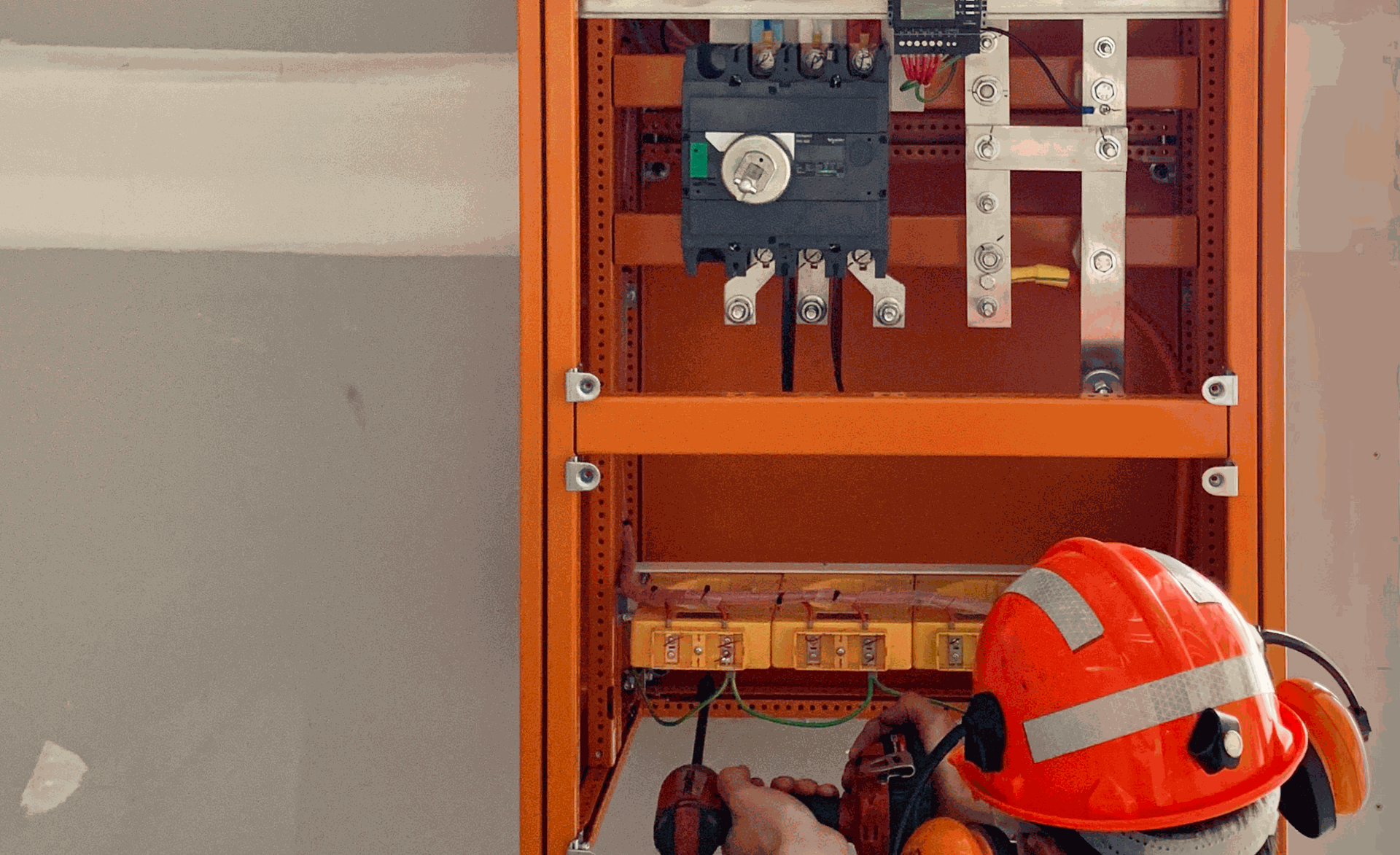
Design verification covers the design: temperature rise and thermal performance, short-circuit withstand strength, clearances and creepage distances, protection against electric shock, IP rating and enclosure integrity, mechanical operation, and the integrity of the protective circuit.
Routine verification is the separate check carried out on every single assembly before it ships — wiring, operational function, insulation resistance, and workmanship. A manufacturer can have a beautifully verified design and still hand over a board that was never routinely checked. Ask for both.
Form separation, in plain terms
Form of separation describes how much physical segregation exists inside the enclosure. It is not a safety ranking exactly, but it is close to one in practice, because it determines what can be worked on while the rest of the board stays live.
- Form 1 — no internal separation. Everything shares one space.
- Form 2 — busbars separated from the functional units, but the functional units are not separated from each other.
- Form 3 — busbars separated from functional units, and functional units separated from one another. Terminals for external conductors are not separated from each other.
- Form 4 — as Form 3, plus terminals for external conductors separated from one another as well.
Forms 3 and 4 are further split by sub-type (3a/3b, 4a/4b) depending on whether terminals sit with their associated functional unit or in a separate compartment. Commercial and industrial boards in Australia commonly land on Form 3b or Form 4b.
The practical argument for higher forms is maintenance. In a Form 1 board, isolating one outgoing circuit for work often means shutting the board down. In a Form 4b board, an electrician can work in a terminal compartment with the rest of the assembly still running. If the site cannot tolerate an outage — a hospital, a water treatment plant, a plant room feeding refrigeration — that difference is the whole ballgame. Higher forms cost more in steel, labour and footprint, so the honest approach is to match the form to the site's actual outage tolerance rather than defaulting to the highest number available.

One thing that catches people out
Under the standard there is an "original manufacturer" who is responsible for the verified design, and an assembler who builds to it. If you modify a completed board on site — adding a way, changing a protective device for one with different characteristics, drilling the enclosure — you may have made yourself the manufacturer of that modification, and the original verification may no longer cover it. It is a good reason to get the schedule right before fabrication rather than after.
What to ask for
When you request a quote, ask the manufacturer for the verification route used, the fault level and duration the design is verified to, the form of separation, the IP rating, and confirmation that routine verification is documented per board. A manufacturer who builds properly will have all of this ready. One who does not will change the subject.
WISE builds large custom switchboards design-verified to AS/NZS IEC 61439 for electricians, contractors and wholesalers, with a lot of our work in the Endeavour Energy network area. You can read more about our switchboard manufacturing capability, or about how we work if you have not dealt with us before. Trade enquiries and drawings are welcome — call 1300 368 331.